Why a Simple Activity Is Not Always Simple: The Invisible Cognitive Load in Youth Work
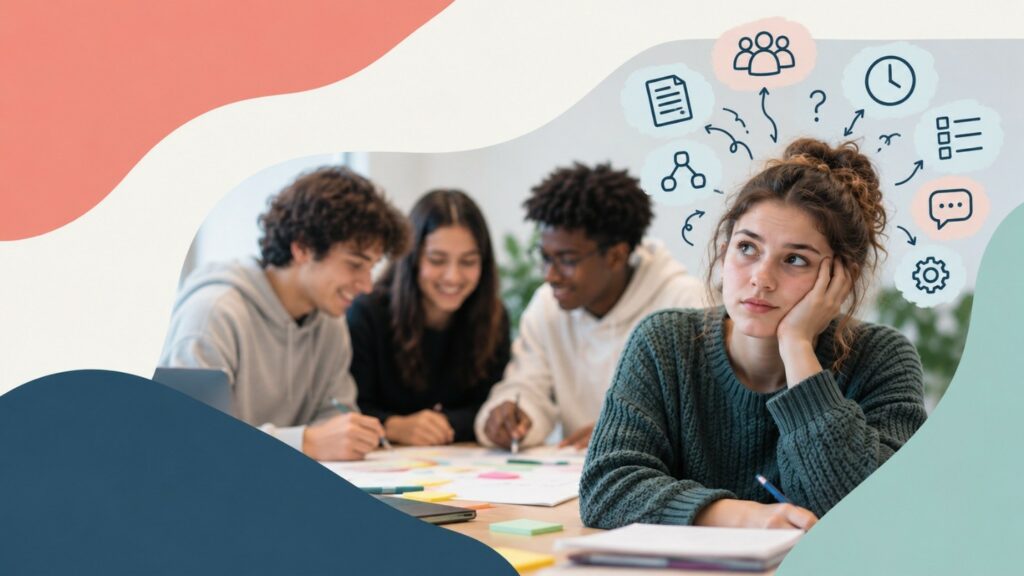
Imagine a youth worker giving a group what seems like a simple task: “Read the instructions, choose a role, remember the three steps, complete the activity with your team, and be ready to present your results in ten minutes.” For many participants, this may feel straightforward. For others, however, the same activity involves managing several […]
The Blind Spot in EU Disability Policy: Where Does Youth Work Fit In?

Across the European Union, disability rights and inclusive education are climbing the political agenda. Strategies are published, targets are set, funding lines are opened. And yet, if you look closely at where that attention lands, a pattern emerges: almost all of it is aimed at the formal education system — schools, universities, official qualifications. Youth […]
From Ideas to Practice: How Inclusive Youth Work Is Being Developed

Moving Beyond Awareness In previous articles, we explored why inclusion matters and how youth workers can support young people with Specific Learning Disorders (SLDs). However, inclusion does not stop at awareness or good intentions. Creating truly inclusive youth work requires concrete tools, tested approaches, and a continuous process of reflection and adaptation. At this stage, […]
The Role of Youth Workers in Supporting Young People with Dyslexia and Other Specific Learning Disorders

Specific learning disorders – such as dyslexia, dysgraphia, dysorthographia, and dyscalculia – are neurological in origin and affect reading, writing, or mathematical abilities. These conditions are not related to a lack of intelligence, in many cases, young people with these disorders possess average or above-average cognitive abilities; however, they experience specific difficulties in processing information […]
Inclusion in Youth Work: Practical Approaches for Working with Young People with Specific Learning Difficulties

Inclusion is a core value of youth work, emphasizing equal access, active participation, and respect for diversity. For youth workers, inclusion means creating safe, supportive, and flexible learning environments where all young people can engage meaningfully.
Why Inclusion in Youth Work Matters More Than Ever

Inclusion isn’t just about being present — it’s about feeling valued, heard, and empowered. Discover how youth work can move beyond good intentions to real, lasting impact.
Dys in Youth Field: Making youth work truly inclusive

Inclusive youth work starts here: tools, training, and playful solutions helping young people with SLD feel confident, included, and ready to lead.