
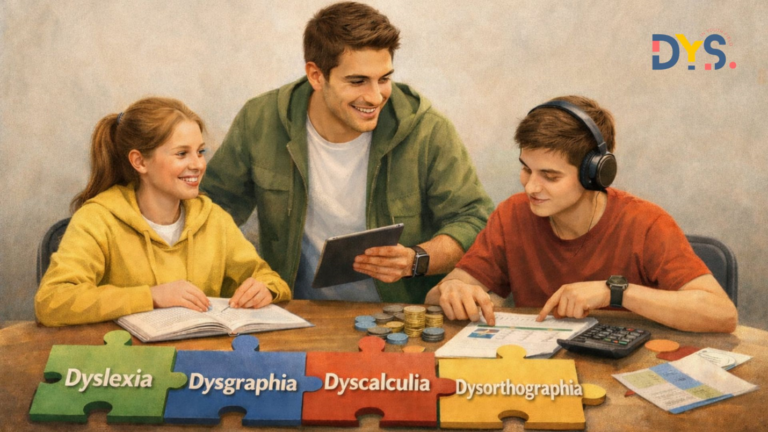
Specific learning disorders – such as dyslexia, dysgraphia, dysorthographia, and dyscalculia – are neurological in origin and affect reading, writing, or mathematical abilities. These conditions are not related to a lack of intelligence, in many cases, young people with these disorders possess average or above-average cognitive abilities; however, they experience specific difficulties in processing information during the learning process. For this reason, the role of the youth worker becomes particularly important, especially during the transition from school to independent living.
Recognizing Strengths as a Starting Point
Research indicates that long-term outcomes are influenced not so much by the learning disorder itself, but by the attitudes and support present in the surrounding environment. Diana Teresa Coelho emphasizes that appropriate support can help compensate for learning difficulties while enabling young people to develop their strengths. Therefore, youth workers should begin by identifying the young person’s abilities and areas of confidence.
A strength-based approach helps reduce the risk of low self-esteem and lack of motivation. Research by Sally Shaywitz highlights that the presence of a supportive adult often becomes a decisive factor in the life trajectory of individuals with dyslexia.
Clear Structure and Everyday Strategies
Young people with dyslexia or dyscalculia often experience difficulties with time management, organization of activities, and maintaining attention. Consequently, youth workers should support them in establishing clear structures by breaking tasks into smaller steps and using practical tools such as calendars, reminders, and visual planning strategies.
In the case of dyscalculia, it is particularly important to strengthen practical life skills related to financial planning, time management, and understanding work schedules. Real-life learning situations, such as budgeting or calculating everyday expenses, can help young people develop confidence and practical competence.
Emotional Safety and Respect
Specific learning disorders are frequently accompanied by feelings of anxiety and reduced self-confidence. Youth workers should therefore create a safe and supportive environment in which mistakes are understood as a natural and necessary part of the learning process. Situations involving public reading or performing calculations should not be imposed if they cause significant stress.
Recognizing and acknowledging progress is equally important. Even small achievements can strengthen motivation and perseverance. Research demonstrates that a sense of belonging and acceptance is strongly associated with higher levels of engagement. Thus, the responsibility of youth workers extends beyond the development of practical skills to include the creation of emotionally safe learning environments. Errors should be viewed as part of the learning journey rather than as indicators of personal value.
Flexible Learning Approaches
For young people with dysgraphia or dysorthographia, traditional text-based learning methods may present additional barriers. Therefore, youth work should incorporate diverse and flexible approaches, including discussions, project-based learning, creative activities, and the use of assistive technologies such as text-to-speech tools.
Carol Ann Tomlinson’s theory of differentiated instruction emphasizes that different learning pathways can lead to the same educational outcomes. Youth work provides an opportunity to create more flexible learning environments than those typically found in formal education systems. Activities can include discussions, mind-mapping, project-based tasks, and the use of digital tools such as speech-to-text software, text-to-speech programs, visual applications, or educational games.
Providing young people with options for expressing their ideas – whether orally, visually, or through digital formats – helps reduce the pressure associated with technical skills and allows greater focus on content and clarity of thought. A flexible environment that responds to individual needs helps young people understand that their thinking, creativity, and engagement are valued, rather than solely the format of their work.
Conclusion
Specific learning disorders do not prevent individuals from leading independent and fulfilling lives. However, without appropriate support, they may increase the risk of social exclusion. Youth workers play a key mediating role by helping young people recognize their strengths, develop practical life skills, and build self-confidence.
When support is grounded in respect, clear structure, and the development of real-life competencies, conditions such as dyslexia or dyscalculia are no longer perceived as barriers, but rather as different ways of thinking and learning.
References:
Coelho, Diana Tereso (2013). Dificuldades de Aprendizagem Específicas: Dislexia, Disgrafia, Disortografia e Discalculia. Porto: Areal Editores.
Shaywitz, Sally (2008). Overcoming Dyslexia: A New and Complete Science-Based Program for Reading Problems at Any Level. New York: Alfred A. Knopf.
Tomlinson, Carol Ann (2008). The Differentiated Classroom: Responding to the Needs of All Learners. Alexandria, VA: ASCD.
Ministry of Education (2011). Supporting Students with Learning Disabilities: A Guide for Teachers. British Columbia Ministry of Education.
Rebelo, José António (1998). Dificuldades de Aprendizagem em Matemática: As suas relações com problemas emocionais. Revista Portuguesa de Pedagogia, 2, 227–249.
Article prepared within the project “DYS in Youth Field”
Project No. 2024-2-BE04-KA220-YOU-000271848
Project funded by the European Union
Partners: Logopsycom; Jovesolides España; Escape4Change; Eunoia; Druskinininkai JUC